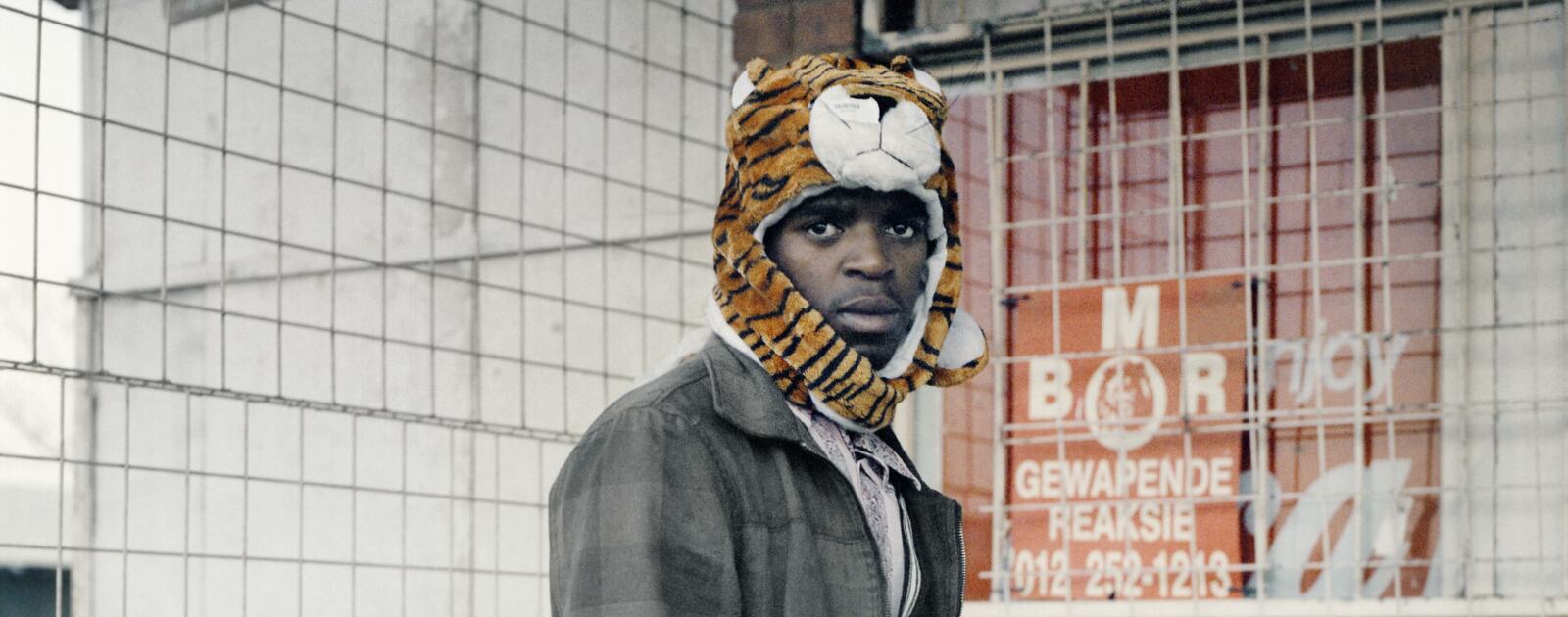
Thabiso Sekgala was a South African photographer whose work concerns post apartheid, an interest in identity politics and moving away from ‘struggle’ photography. His exhibition at the Southbank centre was his first in the UK and documents two former homelands, the tenure established by Aparteid government to house black South African’s forced to leave urban areas and the former homes. The focal point of the exhibition was the idea of home, with Sekgala commenting “The idea of home is very complex and changes depending on who you are and where you come from”, initiating an individual perspective through his lens.
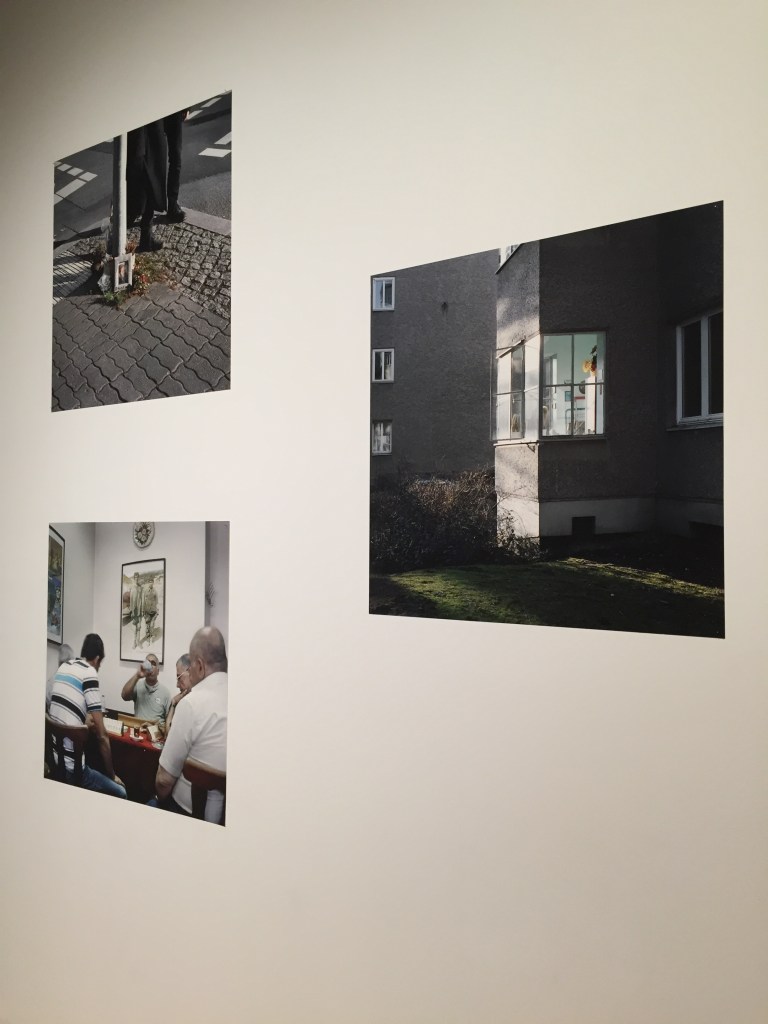
The show was a very small space, adding an intimate feel for viewers as they confront the close portraits places on the walls. On the walls and ceiling hung thin cotton sheets of fabric against dark lighting, setting of seriousness and of a different landscape, perhaps reflecting the home land of Sekgala and the lack of luxury these people attained during apartheid. -The Images and hanging were very simplistic and I enjoyed that, there was a sense of being down to earth and a work in progress. He used square format and colour film to “express his acute sensitivity” (fellow South African photographer), this format adding a symmetry and uniform feel to the room, the shape composing the images.
The intimate feelings between subject and photographer are instigated by his attitude towards the creation of the portrait. he spoke to his subjects “demonstrating empathy and engagement”. His work is also different to others of the time, it “symbolizes when documentary photography was shifting to look a the self, rather than others” something which we see as a norm today but was a whole new concept back then.
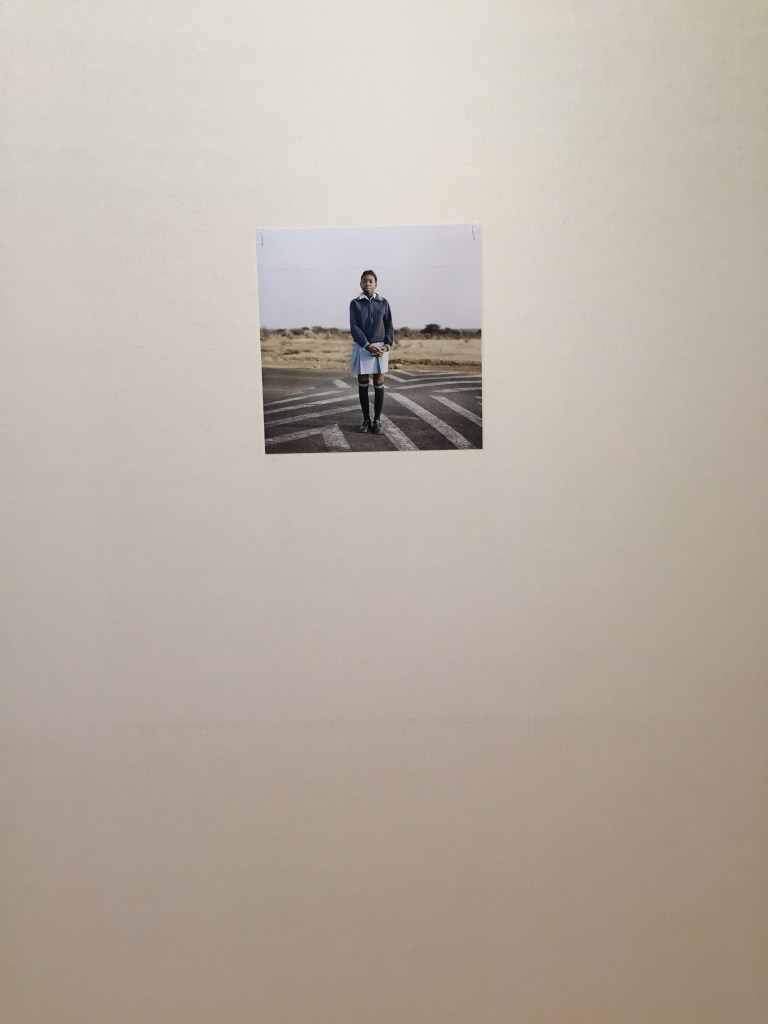
The image above was my favourite form the exhibition with regards to light and composition, she appears alone in the vast outdoors and out of place, yet she faces the camera with a defiance and anger, only her clutching Hans giving away any sort of anxiety. I also enjoy the size of the image, it’s not overwhelming and the lack of frame adds again to this idea of work in progress and reflects the political and social elements of the time.
The reason I found this exhibition so relevant to my own field of work is because without documentary photography, iconic and important moments in time would not be documented. The horrific and violating time of apartheid is something that the world needs to be aware of when taught history and reflecting on the past. Sekgala’s images depict this but they also also viewers to delve into each subject within the portraits and feel a more personal attachment to them, it makes each one of us question the idea of ‘Home’ and where it is that we feel this comfort.
 Bryony's Blog