The exhibition itself consists of a wide range of works, filling the large building but I’m going to focus on a few I felt were relevant to my practise and exceptional to experience. I have visited previously and the space itself is perfect for installation and cinema, this exhibition being no exception.
Chen Wei ‘In the Waves’ 2019
Wei’s focus is on photography, film and installation, which is what you experience the moment you step foot into the space, a smokey hue makes the room and only neon backlit images light the concrete interior. The exhibition successfully reconstructs the Chinese club scene of 1990’s, an urge to relive the sense of freedom and power, which feel so relevant as a contrast to the China and its conflict today. The images depict an escapism and freedom which I feel can only be captured through dance , the images placed on light boxes so they act as the light source for the space.
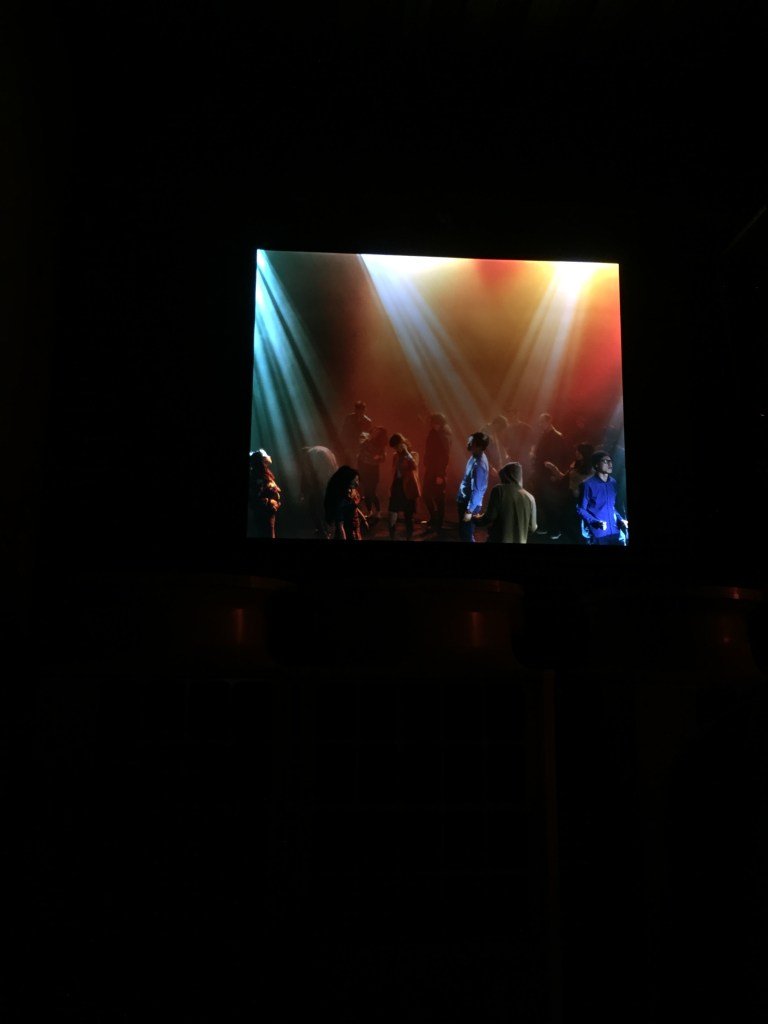
Whilst the images appear staged, they add to the surreal sense of reconstruction and nostalgia, a dreamscape that viewers are supposed to fall into. There were also posters containing uv text that could only be viewed in the exhibition and not in natural light, alluding to the secrecy of the club scene and this feeling of escapism again.
This work relates to my interests because of the sense of place, space and time, transforming an interior into something it was years ago. whilst the work is installation and conceptual, this idea of revisiting memory speaks to me as documentary, as Wei attempts to tell a story of a time once passed. I also feel the collaboration of viewer and artist is something that should be relevant in all art, a conversation should begin which informs and teaches.
Jenn Nkiru ‘Rebirth is Necessary’ (2019)
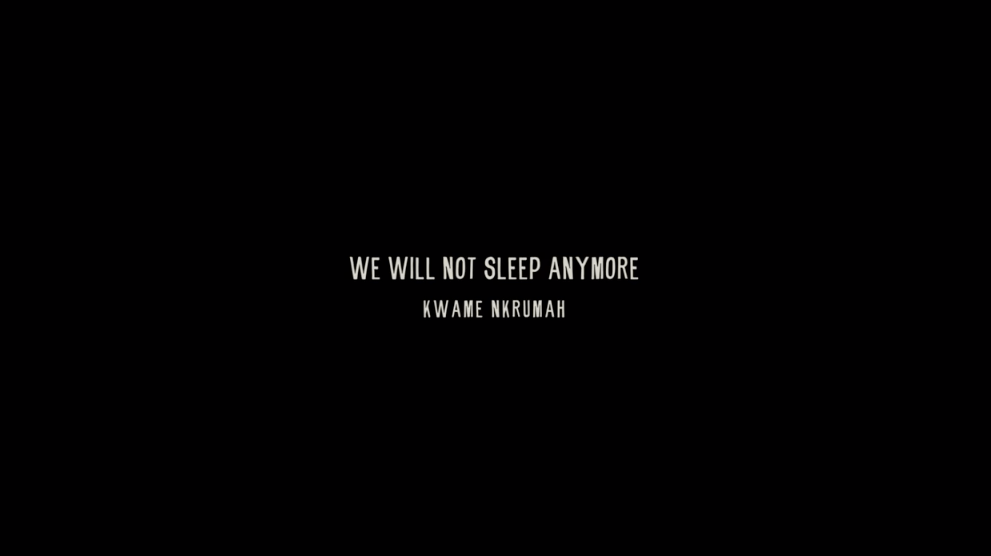
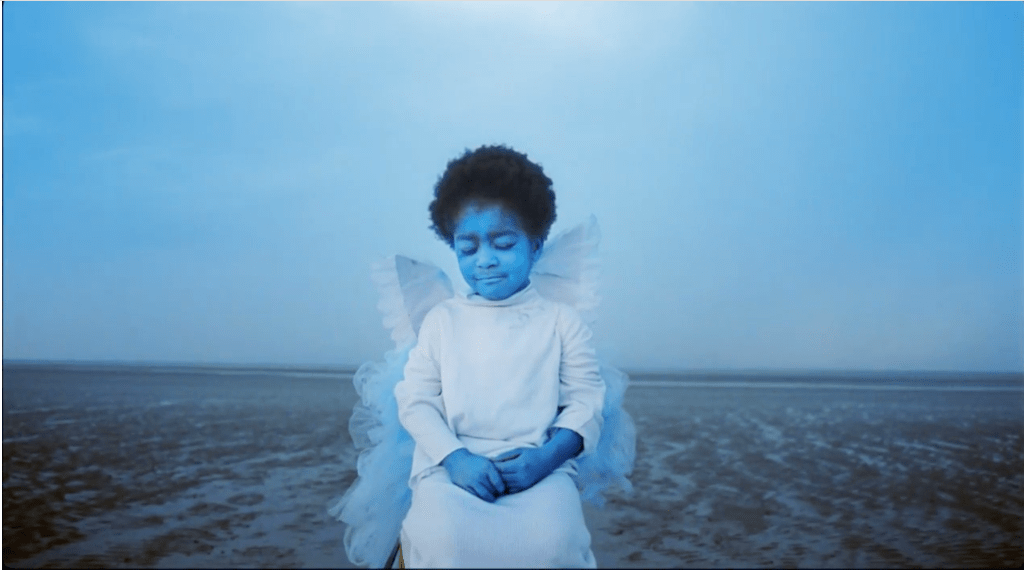
Nkiru dual cinema installation focuses on afro surrealism and the Black arts movement. The use of the large screens encapsulates viewers and beckons them in, there is an instant draw to the images and sounds the cannot be ignored. The film explores a sense of awakening in black culture, as mentioned in its title. There is a strong use of archival imagery and sounds as well as poetry and literature, which I find so essential when teaching others of a different culture and researching a topic. It also enriches the film and gives context to viewers, as we watch the old turn into the new.
I loved the piece because it taught me of celebration and took me on a journey through history. It also made me think about exploring cinema and archival imagery in my own practise as documentary work looks at this focus on history and sometimes the archive, and if I am focusing on family and introspective work then this seems integral to building an image and adding context.
Harley Weir and George Rouy ‘Blindly touching the flood’ (2019)
Weir has been a key figure in the shift towards female gaze in fashion photography yet this exhibition moves away from the traditional fashion image and leads us to the more traditional practise of analogue photography. To enter the space you must walk through the huge vault door of the 180 Strand to be surrounded by red velvet covering every surface in the small room. Placed leaning on the walls are life size prints depicting human silhouettes on black paper, contrasting against the plush red of the interior space. After studying the prints I realised they were huge photograms, the practise of placing items on photographic paper in the darkroom and exposing them for an amount of time to simply document the silhouettes. This camera less photography is normally small so to view it on this scale was impressive. The work is about love, liberation and human expression, illustrated through their production, by body heat and the exposure of a disco ball, adding a playful and sexual tone. When re examining this we start to see the room around us as womb like, the vault as the treasured place of the strand and now the womb as the treasured place for rebirth. My interest in this installation is fuelled by the use of such an old technique being used to create something new, and to liberate women.
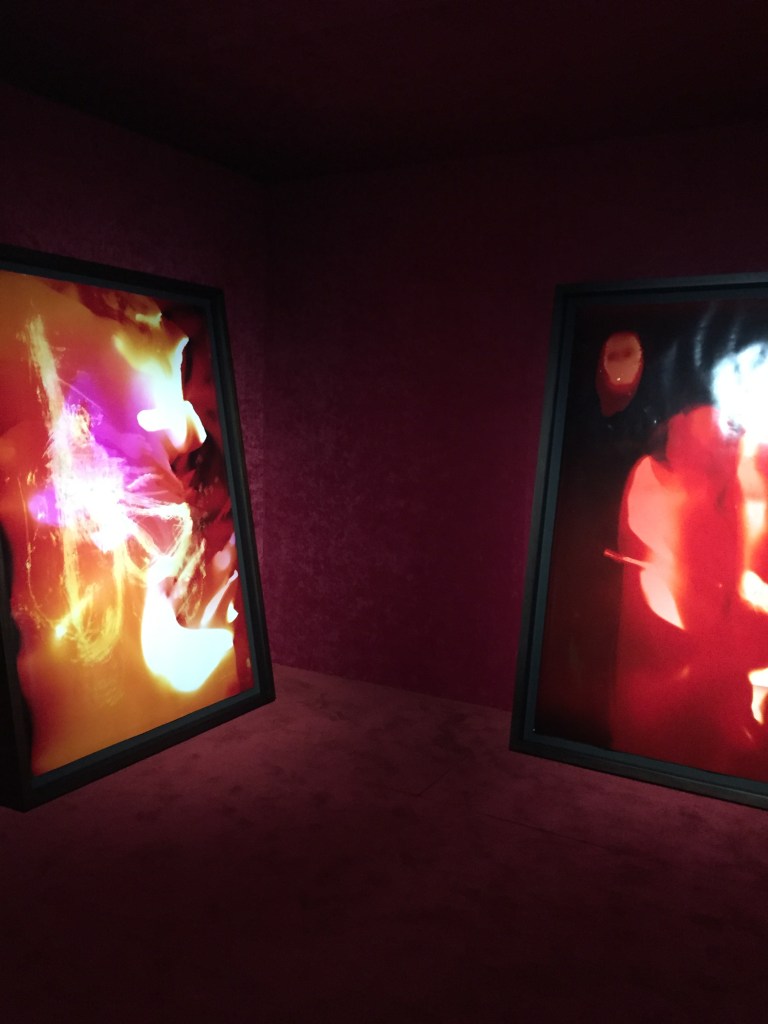
Whilst this isn’t inherently documentary, I still find it relevant to my practice as it explores space and collaboration between viewer and artist. I want my work to make people feel something and to feel an affiliation with what they see. the presentation is something I could think bout as well, as I have never presented a print over A1 but the size of Weir and Rouy’s prints confront the viewer and allow them to see every detail. The process is something I am highly impressed by and find inspiration in using analogue tools to create something perhaps not so traditional.
 Bryony's Blog