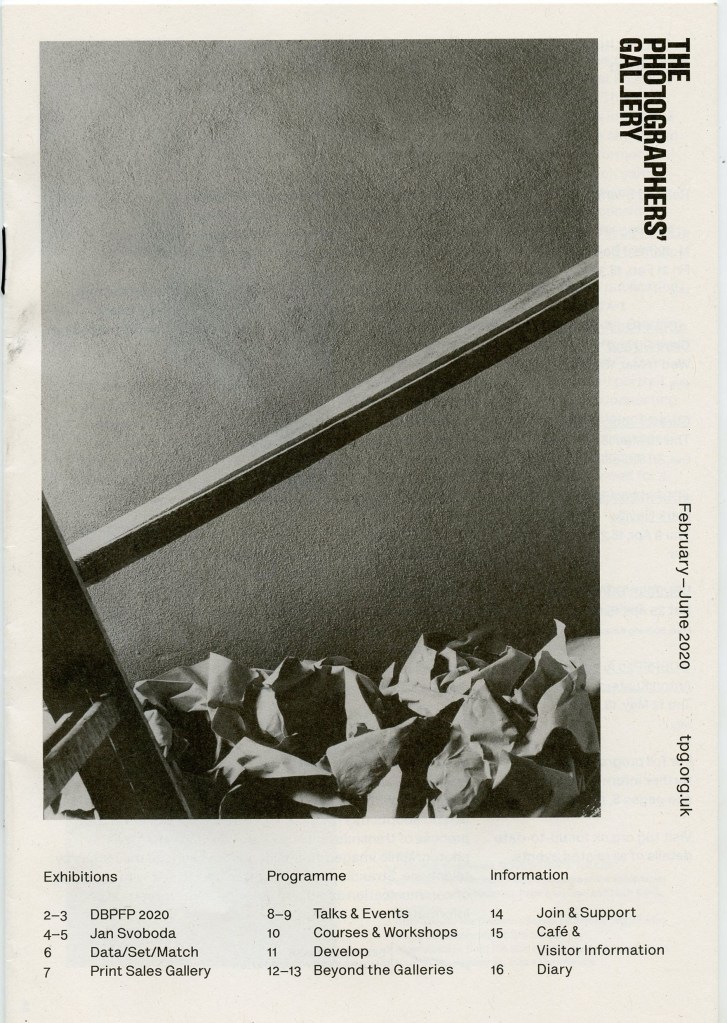
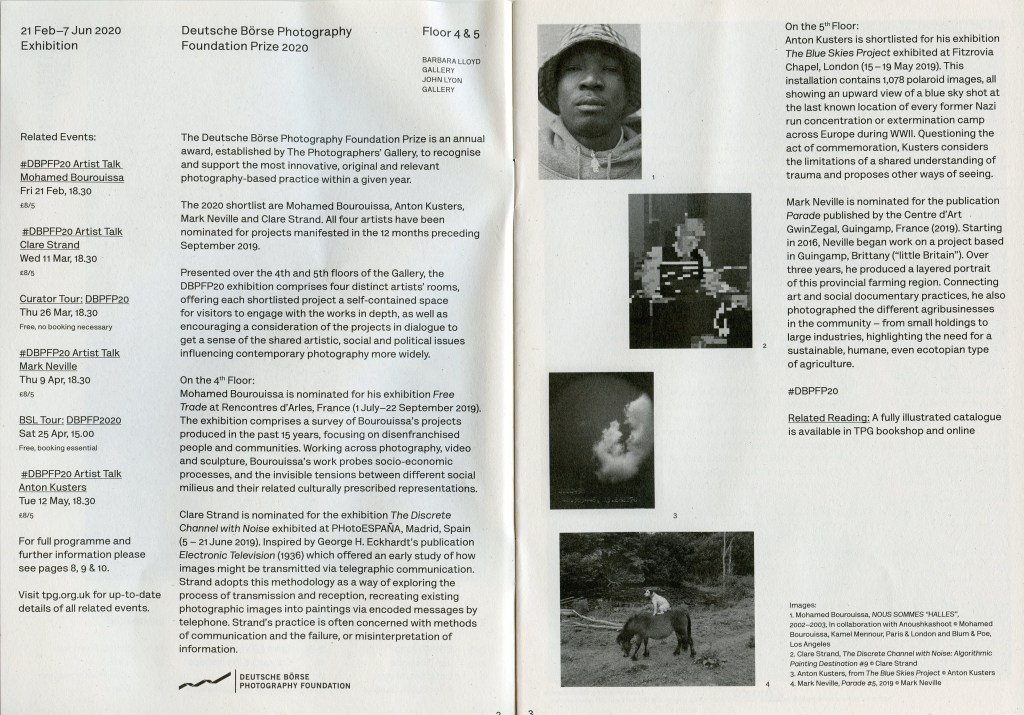
I recently visited the Deutsche Borse prize which is highly anticipated every year in the photographic world and brings together a huge range of work to one space. I’m going to be discussing one piece from the exhibition as it felt so unusual and sparking an interest in me with regards to presentation.
Anton Kusters, a Belgian photographer presented his piece One Thousand and Seventy-eight Blue Skies (2019) consisting of 1078 polaroids laid down on a large square table for viewers to rotate around and explore. On the table lay polaroid images, all with the same blue hues yet differing form one another. From a simple aesthetics perspective it’s pleasant and attractive and its layout is unusual so attracts attention. It’s only when reading the statement that the context of war and the seriousness of the work comes into play. The images are taken where concentration camps were during the second world war, all with the camera pointed towards the sky. Beneath each image is the co ordinates and the number of people held in each camp, illuminating gate sheer destructive power the war had on these people. Yet what I find so strong about the work is the sense of hope and choice of subject matter. Instead of focusing on the remains of these buildings or what has been built on top of them, Kusters’ has instead chosen to photograph something that was there when these people were trapped, and is still there to this day. He has managed a kind of photographic time travel, by documenting what they could see.
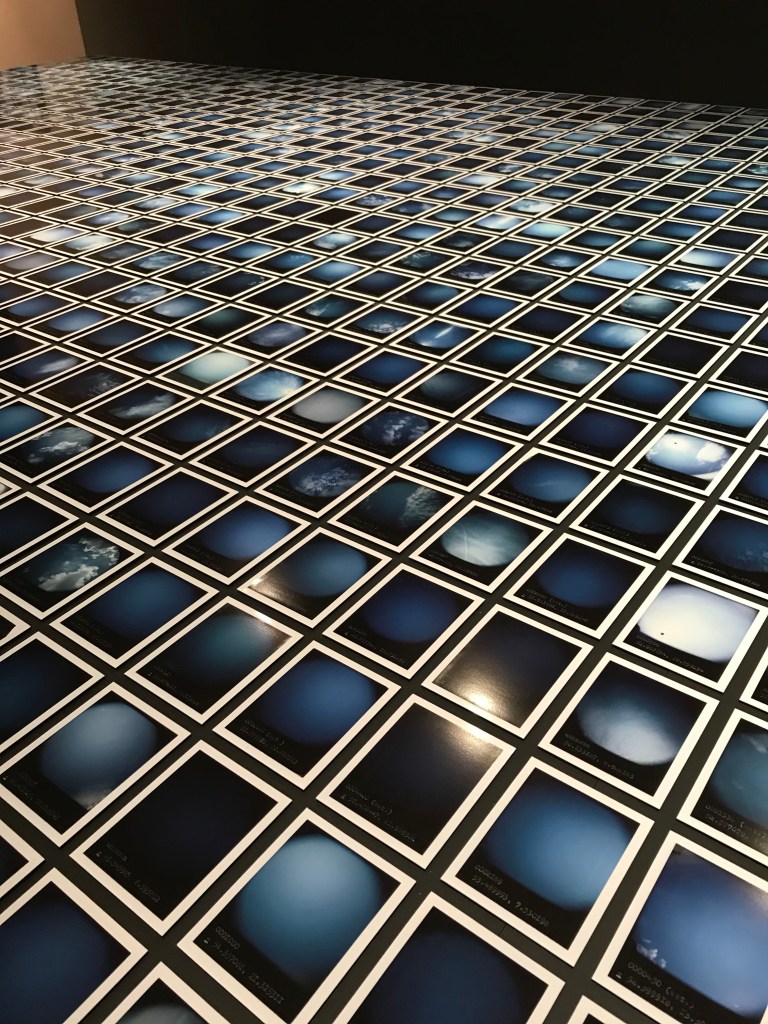
The camera choice reflects this idea of only capturing a moment once, being unable to edit and moving on. These people would only be outside for certain times in the day, they would perhaps get to glance at the sky then be hustled along. I think its a beautiful tribute to those lost in the war and what we can take from it.
With regards to presentation I feel that laying the images down instead of hanging them alludes cleverly to a grave, as we peer down to pay respect. I also think it allows viewers to read all of the numbers as they circle the display, and take it all in. The sheer amount of imagery also adds an overwhelming sense of sadness and necessity for respect. This choice of presentation changes the piece completely and removes it from a traditional photographic piece to something more concerned with fine art and history. I hadn’t considered that work doesn’t always have to be hung so this really spurred my thinking forwards and has made me consider moving images from a wall to a floor or plinth.
 Bryony's Blog