This week I was volunteering in the final residency of the show, led by Annis Joslin. Her work is described on her website as “seeking to explore lived experience through a reflective, participatory process encouraging dialogue and freedom to play. She uses different approaches to generate material, including drawing, animation, photography, performance and story-telling to create lens-based digital artworks that can operate on different platforms, such as galleries, museums, online and in community contexts and situations. “
The exhibition focused on trying to get everyone engaged and also our interaction with objects and what this can mean. This linked back to Jo’s exploration of the subconscious and meant people had to think about what they were doing when placing things and why.
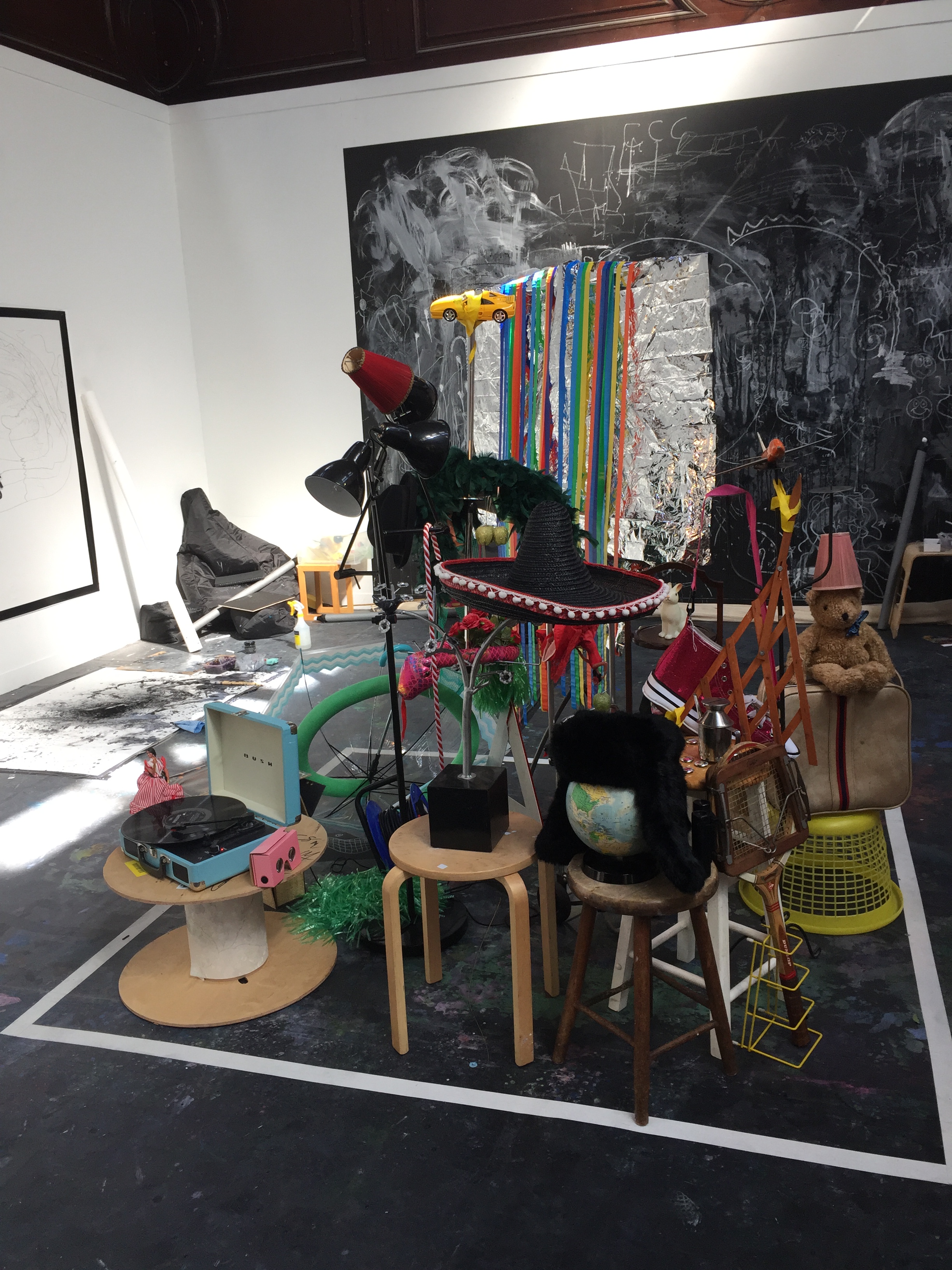
There were several activities for the public to engage with and I was mainly situated around one that required people to interact with a set up collection of random objects within a marked out square. The objects had been taken from Annis’ house as well as bought from charity shops and found items. The public were invited to select one of four folded pieces of paper in a hat, each with an instruction concerning the scene in front of them. For example, one said ‘Replace an object’, leaving an individual to remove one and select a new object from a table with many more. One man said he had real trouble choosing an object and felt bad moving other peoples who had previously taken part. It brings us to question who is in control of art and who decides when it’s final and finished.
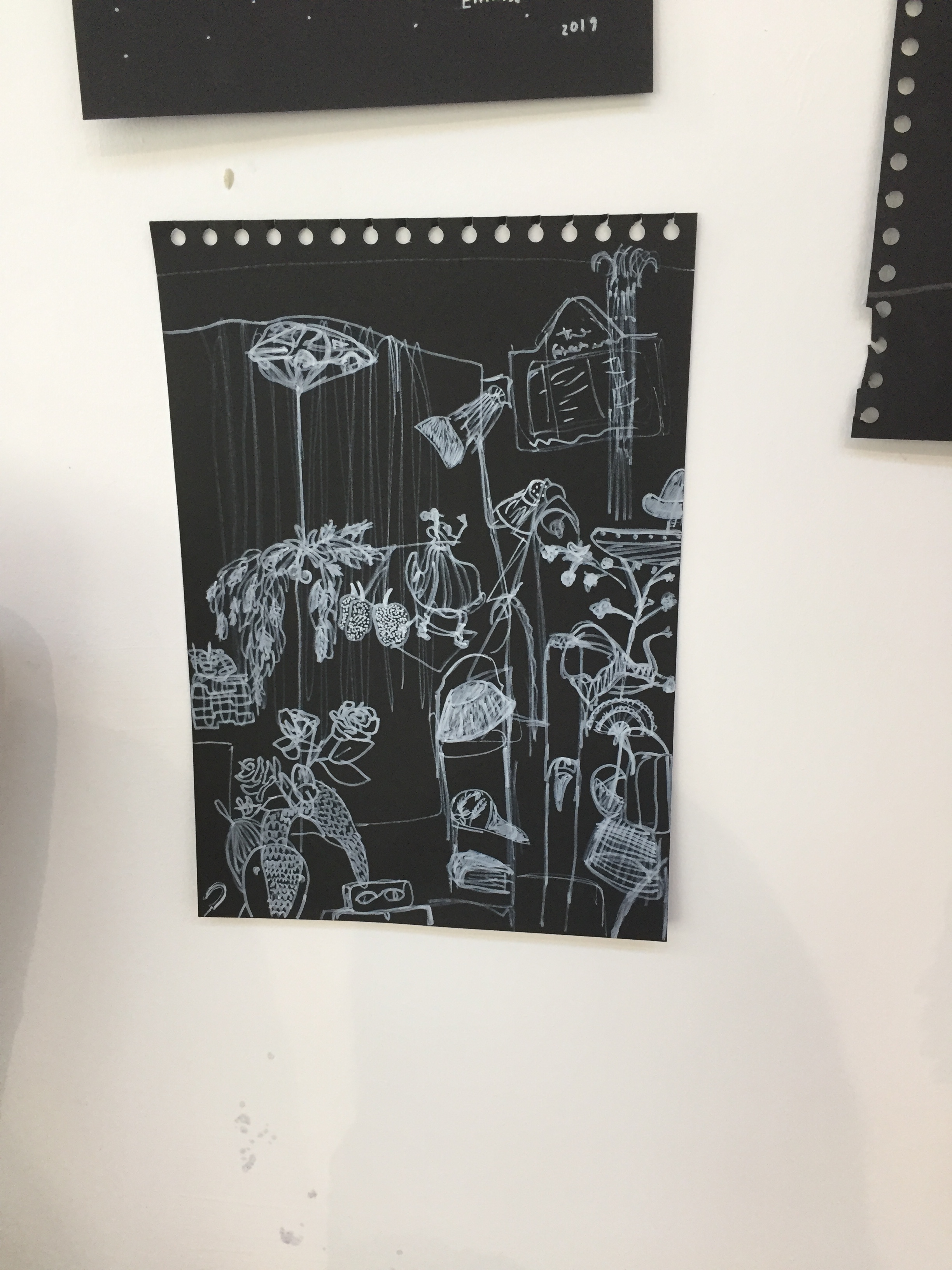
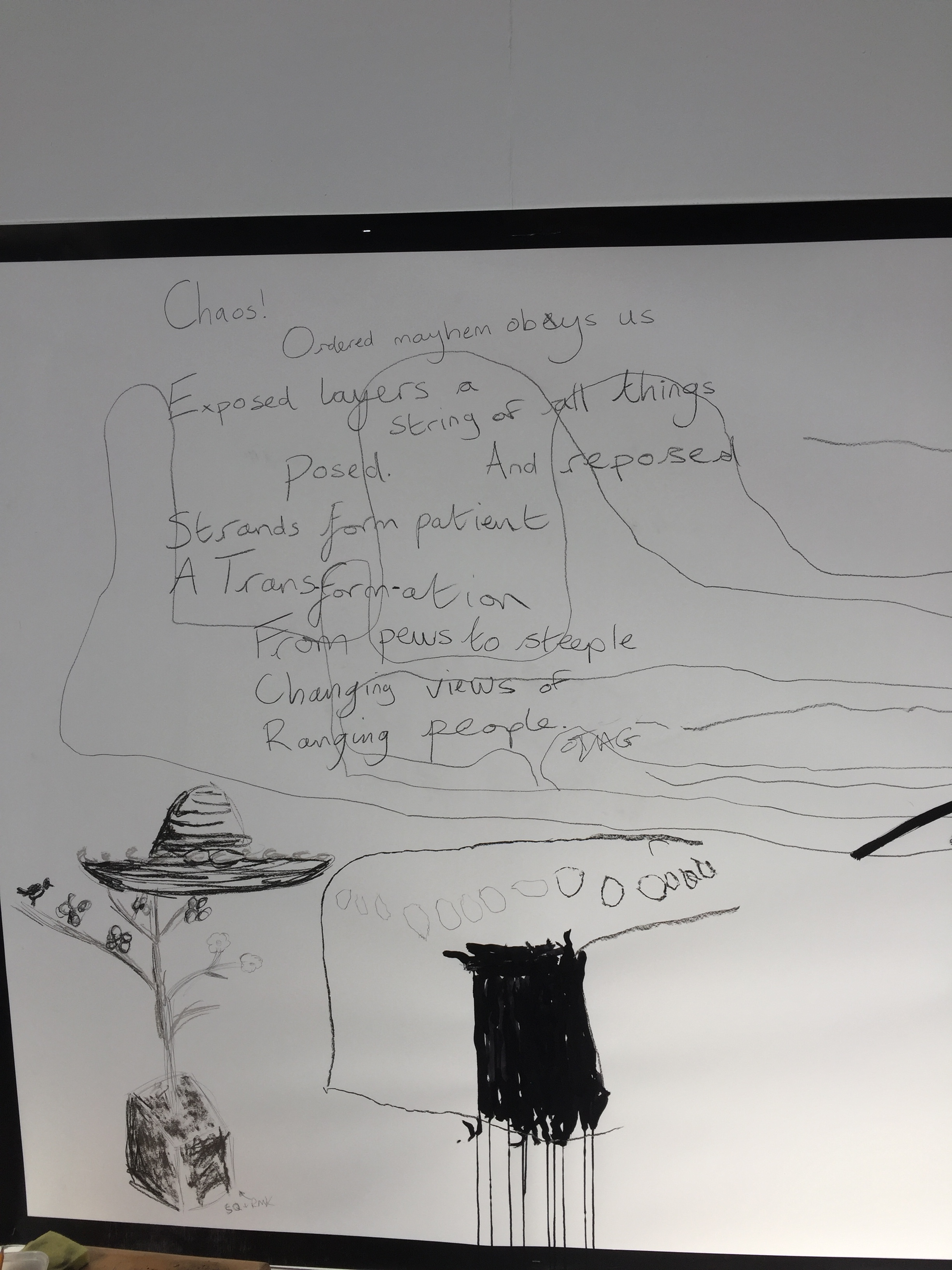
Surrounding the scene were notepads, blackboard style walls and paper to encourage people to draw and respond to what they were seeing. I spent much of the session drawing what I could see, and it ended up being a testament of the moment I began, as items begun to change around and disappear or reappear in different spaces. The freedom of the page encouraged many people to join in, one young man even sitting for half an hour noting, and then writing a poem for the exhibition and his experience.
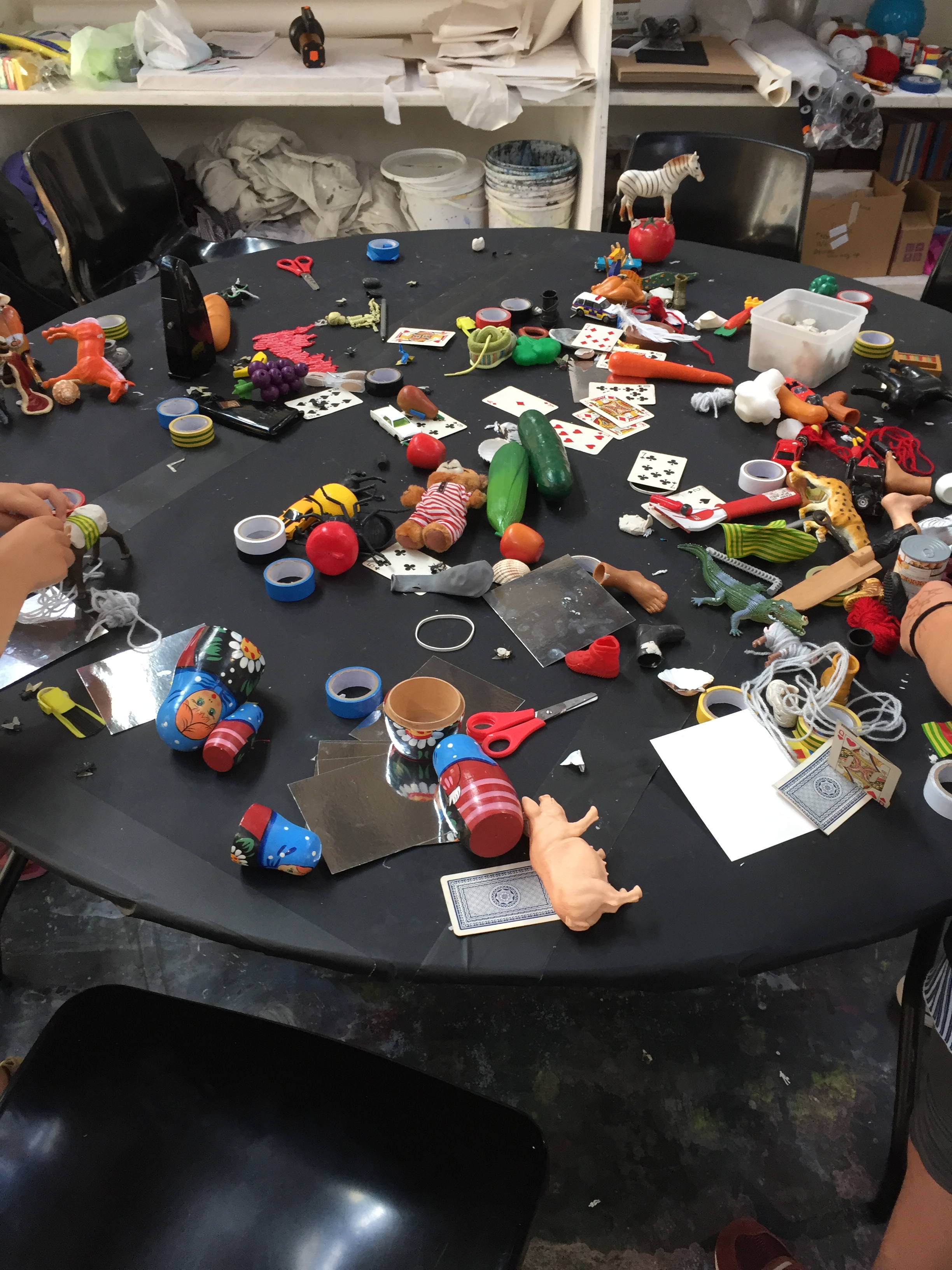
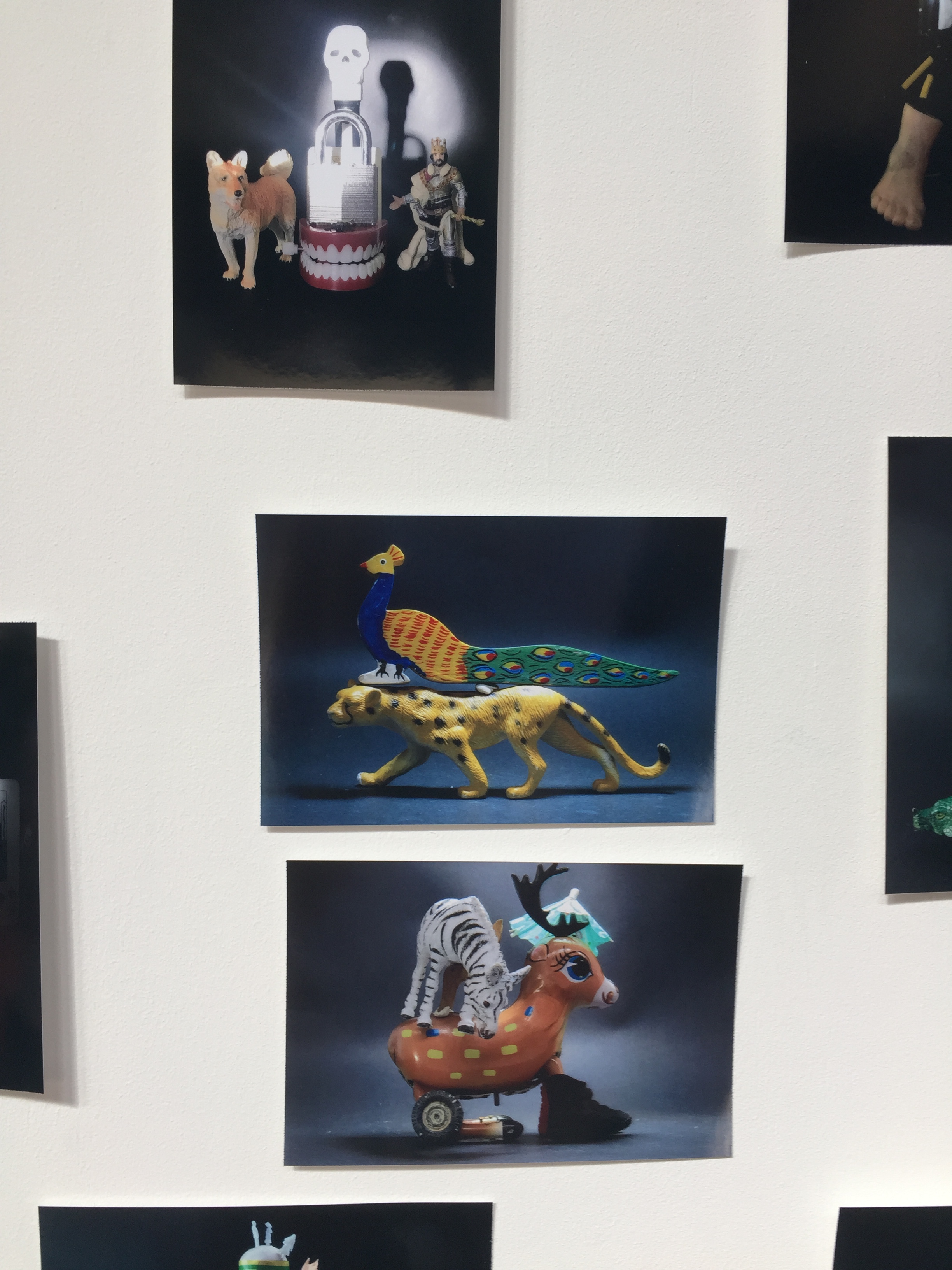
People also had the opportunity to used mix matched toys and smaller objects to create an image in a light box. There was blue tack, tape and plenty of sticking materials to enable people to attach limbs and mini figures together; again illustrating the different ideas we have surrounding objects and how we all react differently. Some of the final images look almost like museum artifacts, photographed in the perfect light.
The exhibition has proved so helpful and intriguing to me, seeing how many different people will engage in art when given the opportunity and why we must make it accessible for all. I have also really enjoyed talking to the public and asking people why they choose certain items, or techniques and could potentially see myself going down this route in the near future.
 Bryony's Blog