Copied from Tate Catalogue:
‘This exhibition brings together over 40 works of art made between 1990 and today by Danish-Icelandic artist Olafur Eliasson. Born in 1967, Eliasson has created a broad body of work that includes immersive installations, sculptures, photography and paintings. The materials he uses range from moss, glacial melt-water and fog, to light and reflective metals. Eliasson’s art comes from three particularly important interests. These are: his concern with nature, honed through his time spent in Iceland; his research into geometry ; and his ongoing investigations into how we perceive, feel about and shape the world around us.’
I found out about this exhibition through the Tate’s instagram page and the many images users were posting in response of their time visiting. Eliasson puts experience at the forefront of his work, thus making it clear why the exhibition is so vital and perfect for this digital age. There are plenty of opportunities to take selfies and images of oneself as the whole space is aesthetically pleasing. This love of the public being involved is why I wanted to visit as I’m interested in how art can be more welcoming when interactive, and to a more diverse audience.
Eliasson describes the layout and objects in the the exhibition essential for creating a ‘temporary community’, as people step more carefully and are aware of those around them. This again adds inclusivity and helps remove the idea of hierarchy and pretentiousness that surrounds art, linking back to my volunteering with Sara Dare questioning who gets to choose what art goes where and why?
My favourite part of the exhibition was an installation named ‘Die Blind Passenger’ (2010) consisting of a long corridor, created inside a black box that uses light and fog to restrict and distort viewers perception. Inside it felt like Roger Deakin’s recent cinematography for Bladerunner 2049 (2017), orange and yellow dusty desert hues. The allude to pop culture adding to the hype around the exhibition, although the film was made eight years after the piece.
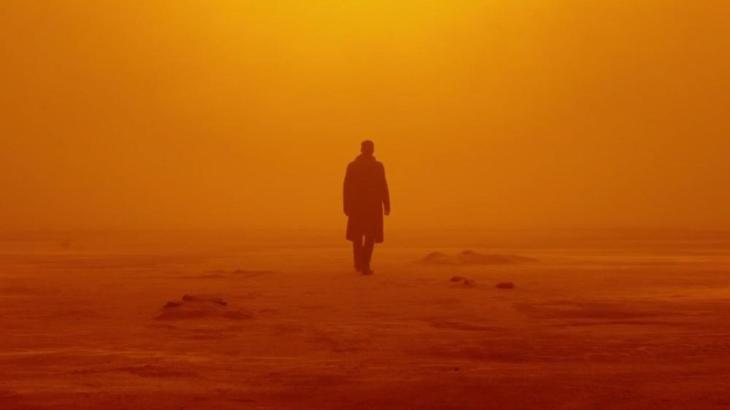
Inside the piece you are unable to see a metre and a half ahead of yourself or behind so your fellow gallery goers begin to disappear. Theres a sense of the unknown and a blindness, almost as though your eyes are closed as you tread more carefully and feel along the walls. I felt an escapism perhaps only attainable through art and something I hadn’t felt before.
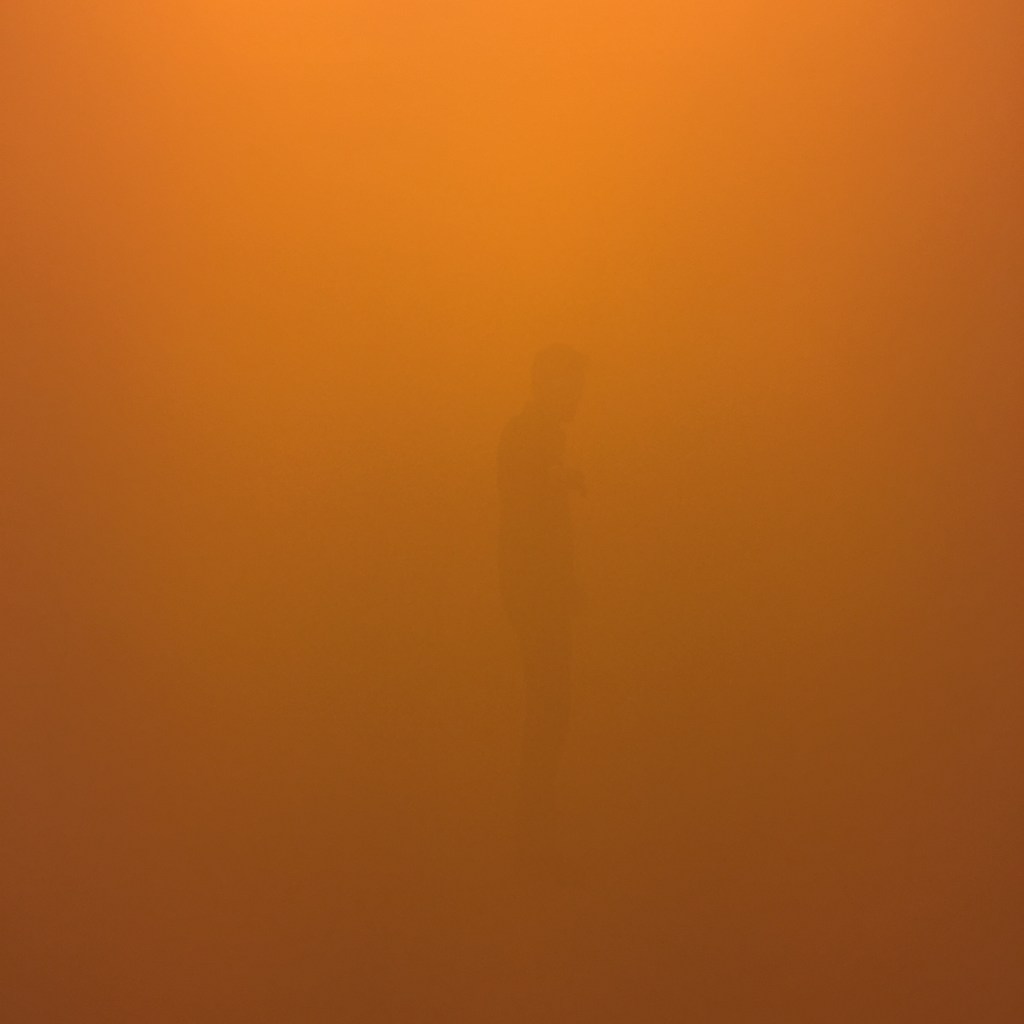
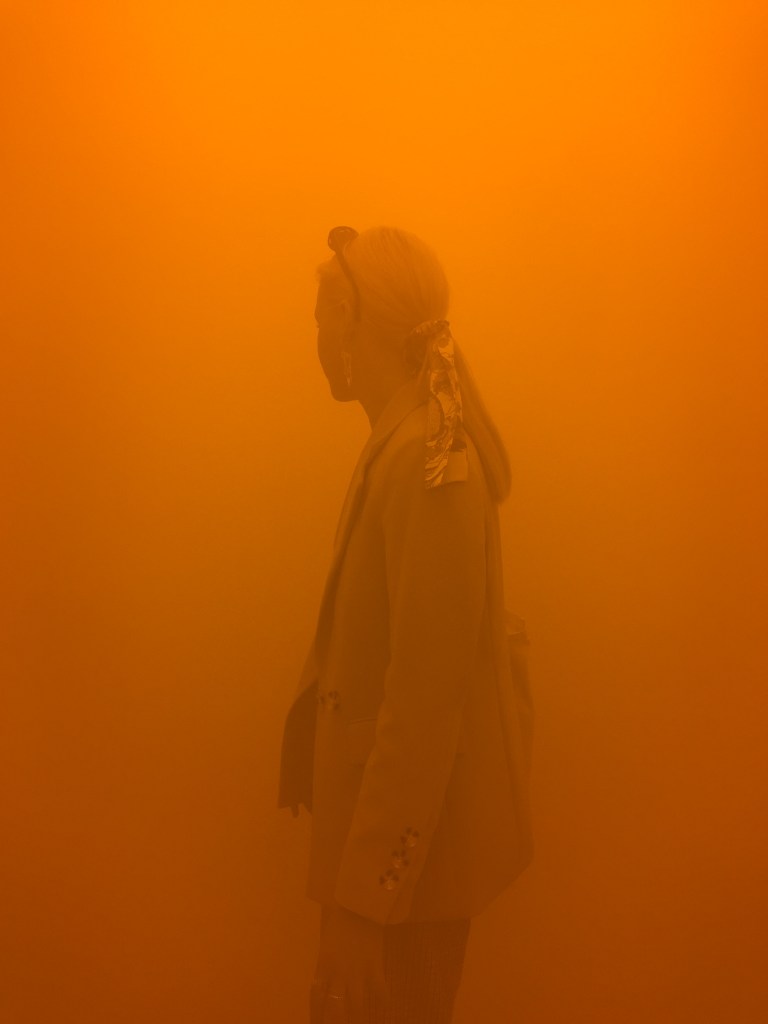
I would highly recommend a visit, even if simply to watch the social aspect and become a part of the ‘temporary community’. I definitely have an interest in the ownership of art and inclusivity so this is something that this exhibition has helped me to explore and will hopefully become a further part of my degree. I also found the inclusion and transformation of a space to be highly important in my practise, even if its not so obvious at first. The recognition and feelings we associate with certain spaces, perhaps the home or places we visited as children continually stay with us throughout our lives. Although Eliasson isn’t depicting this specific feeling of home, it makes me see the importance of creating installations and spaces, and that documentary photography doesn’t have a box its confined to, I could look at including a more fine art stance in my practice.
 Bryony's Blog